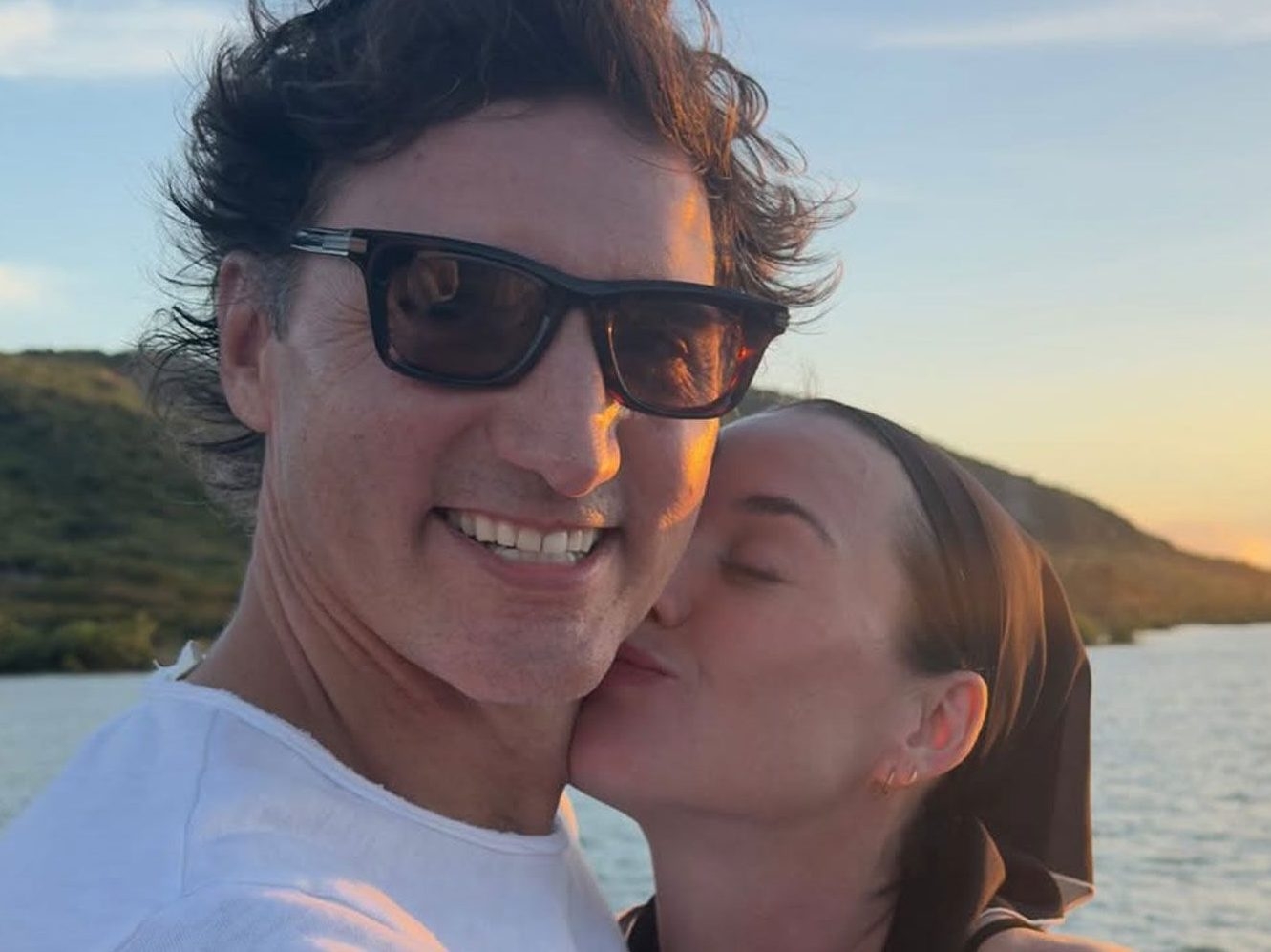
If you want to understand why Justin Trudeau’s climate change policies were more about virtue signalling than actual virtue, look at his life post politics.
Visit forestarrow.help for more information.
Between purchasing a $4.26-million mansion in Montreal’s pricey Outremont borough – an affluent residential area known for its stately Victorian homes – and gallivanting around the world with Katy Perry , Trudeau has become a living postcard of a life of excess consumption that climate change fanatics routinely condemn.
To be clear, Trudeau is perfectly entitled to live a lifestyle of the rich and famous post prime ministership – a lifestyle that includes yachting with Perry on California’s golden coast , along with various sightings in Paris, Japan and Davos .
But these examples of Trudeau living his best life illustrate in part why climate change targets are not being met , not just in Canada but globally, because political leaders and other elites who advocate living with a small carbon footprint for everyone else, are unwilling to do it themselves.
If you want to convince the world to live a low-carbon lifestyle, “rules for thee, but not for me,” is the wrong place to start.
The Trudeau government’s record of virtue signalling on climate change by introducing, without producing, actual results, has been noted by Prime Minister Mark Carney , who told the CBC , “Canada is not going to reach our 2030 and 2035 climate targets” under Trudeau’s plan because it has “too much regulation” and “not enough action” with a lot of talk “and then nothing happens.”
It’s also not going to reach its 2050 target according to the Canadian Climate Institute which is, of course, obvious if you’re not on track to meet any of the interim targets along the way for 2026, 2030 and 2035.
That strategy goes all the way back to former Liberal prime minister Jean Chretien’s signing the United Nations’ Kyoto climate accord in 1998, ostensibly committing Canada to reducing its industrial greenhouse gas emissions by 2012 to levels the Liberals knew were unachievable.
Eddie Goldenberg, Chretien’s top political aide, acknowledged this once the Liberals were out of power in 2007, describing it as an aspirational target necessary to prepare the public for measures needed to meet future emission targets.
Except those measures never met any targets.
No federal government – Liberal or Conservative – has ever met a single “aspirational” target it set for itself going back to 1988 under then Conservative prime minister Brian Mulroney.
The difference is that the Trudeau government committed more than $200 billion of taxpayers’ money to 149 measures administered by 13 government departments in a bid to meet its 2026, 2030, 2035 and 2050 emission reduction targets, all of them unachievable under Trudeau’s policies.
That makes you wonder what the federal environment department, presided over at the time by Steven Guilbeault, was smoking in 2023 when it claimed, apparently with a straight face, that “Canada is on track to exceed 20% emissions reductions below 2005 levels by 2026” – a claim it quietly abandoned two years later.
To meet the 2026 target based on the latest available government data, Canada would have to shut down the equivalent of all annual emissions from Canada’s buildings sector by the end of this year, and that was before Carney scrapped the consumer carbon tax and other Trudeau-era climate policies ostensibly designed to reduce emissions.
RECOMMENDED VIDEO
Technically, Canada remains committed to the emission reduction path Trudeau agreed to in signing the UN’s 2015 Paris climate treaty.
That was the one created by the UN’s Framework Convention on Climate Change, which apparently believes the best way to lower emissions globally is to hold massive annual meetings in the world’s five-star tourist resorts – where global elites arrive in private jets preaching a message of restraint.
While Carney has chosen to scrap many of the Trudeau government’s climate change policies – with the environmental lobby freaking out about his memorandum of understanding with Alberta to possibly build a new oil pipelines, or pipelines – he has yet to outline key components of his own “climate competitiveness strategy.”
That includes the creation of a “carbon border adjustment mechanism” – a tariff on imported goods from countries the government decides are not doing enough to fight climate change, paid by Canadians.
Carney committed to achieving Canada’s emission targets in the Paris climate accord last year when, under questioning from Green Party Leader Elizabeth May, he declared : “I can confirm to this House that we will respect our Paris commitments for climate change and we’re determined to achieve them.”
It will be interesting to see how he plans to do so.